

Introduction to the Crypto Payment Revolution
What Are Crypto Payment Platforms?
Let’s start with a simple truth — money is evolving. Just like we moved from bartering to coins, and then to plastic cards and digital wallets, crypto payment platforms are the next leap forward in how we send and receive value.
But what exactly are they?
In the simplest terms, crypto payment platforms are digital services or apps that let users buy, sell, transfer, or accept payments in cryptocurrencies like Bitcoin, Ethereum, or stablecoins — often in real-time. Think of them as PayPal or Stripe, but powered by blockchain.
Some platforms focus on retail purchases, allowing you to pay for coffee using Bitcoin. Others act as gateways for businesses, helping them accept crypto payments from customers across the globe. Many also let you convert your crypto into traditional money (fiat) instantly — bridging the gap between the old financial world and the new one.
The magic lies in this “bridge” — crypto payment platforms make it possible for people without access to traditional banking systems to still participate in global commerce. At the same time, they empower digital-savvy users to control their finances without needing a middleman like a bank.
Why They Matter in Today’s Financial World
Let’s be honest — nobody enjoys waiting for a bank transfer to clear over the weekend, or paying ridiculous international fees just to send $100. That’s where crypto payment platforms come in and completely flip the script.
Thanks to blockchain, these platforms allow for fast, borderless, and low-cost transactions, no matter where the sender or receiver lives. A freelancer in India can get paid in USDC by a client in Germany — instantly and without a bank holding the payment hostage for “processing.”
This global reach has caught the attention of both small businesses and big brands. Increasingly, merchants are integrating crypto checkouts to attract tech-savvy customers and expand their reach internationally. Platforms like BitPay and Coinbase Commerce are already helping online stores accept crypto with ease.
And let’s not forget the growing number of individuals — especially Gen Z and millennials — who prefer using digital assets over fiat. For them, crypto isn’t just an investment; it’s a lifestyle.
In short, crypto payment platforms are not just tools — they’re part of a larger shift in how the world thinks about money. Fast, flexible, and inclusive, they’re setting the stage for a truly global financial system.
Most Popular Crypto Payment Platforms in 2025
MoonPay – A Global Fiat-to-Crypto Onramp
If you’ve ever wanted to buy crypto with your debit or credit card without jumping through a thousand hoops, MoonPay probably popped up in your search. And for good reason — it’s one of the most widely used fiat-to-crypto onramps in the world.
Overview and Features
MoonPay is essentially the bridge between your traditional bank account and your crypto wallet. It allows you to buy cryptocurrencies using debit/credit cards, bank transfers, and even Apple Pay or Google Pay, depending on where you live.
One of the standout features of MoonPay is its ease of use. The platform is super user-friendly, even for complete beginners. Just pick the asset you want, enter how much you’re buying, go through a quick verification process, and voilà — your crypto lands in your wallet.
MoonPay also supports NFT purchases, letting users buy digital collectibles without needing to already own crypto. That’s a big deal for onboarding newbies into Web3.
Supported Assets and Regions
MoonPay supports a wide range of assets — from Bitcoin (BTC), Ethereum (ETH), and Solana (SOL) to stablecoins like USDC and USDT. It also integrates with several wallets and apps like Trust Wallet, MetaMask, and even some NFT marketplaces.
In terms of reach, MoonPay is available in over 160 countries, making it one of the most globally accessible crypto onramps. However, like most platforms, it does exclude certain high-risk regions due to regulatory concerns.
Pros and Cons
Pros:
- Extremely user-friendly interface
- Fast fiat-to-crypto transactions
- Supports many payment methods
- Global accessibility
- NFT checkout integration
Cons:
- Fees can be on the higher side, especially with card payments
- KYC verification is mandatory and sometimes slow
- Not available in a few regions due to compliance issues
Who Should Use MoonPay?
MoonPay is ideal for beginners who want a quick and painless way to buy crypto using familiar payment methods. It’s also great for people who want to dive into NFTs without managing complicated wallets or exchanges.
However, if you’re a seasoned trader looking for low-fee, high-volume transactions, you might want to pair MoonPay with a traditional exchange or wallet with more advanced features.
Overall, MoonPay makes getting started in crypto as simple as ordering pizza — and for many, that’s exactly what the space needs.
Revolut X – Advanced Features for Bank-Integrated Crypto Users
If you’ve ever used Revolut, you probably know it as a slick digital banking app that lets you spend, save, and exchange currencies on the go. But now, there’s a new player in town — Revolut X, and it’s making waves in the crypto scene with a more powerful toolkit tailored for serious traders and crypto-savvy users.
Difference Between Revolut & Revolut X
Let’s clear up the confusion first. Revolut is the standard app most users are familiar with — a super convenient neobank that offers currency exchange, budgeting tools, and basic crypto buying options. You can grab a few popular coins, but it’s not designed for deep trading.
Revolut X, on the other hand, is Revolut’s crypto-first platform — a separate, more advanced trading interface designed specifically for users who want tighter spreads, more transparency, and deeper market insights. While it’s still tied to your Revolut account for funding, it functions more like a lightweight crypto exchange.
This means lower fees, real-time order books, and features like limit and market orders — things you don’t get with the regular app. Think of Revolut X as Revolut’s crypto-savvy cousin who’s really into charts.
UI/UX and Crypto Trading Experience
Revolut X has kept the user-friendly polish we all love from the main Revolut app, but now with tools that crypto traders genuinely appreciate. The interface is clean, responsive, and doesn’t overwhelm you with clutter.
It supports a solid list of crypto assets (though not as extensive as full exchanges like Binance or Kraken), and the real-time price tracking and intuitive buy/sell functions make it ideal for those who want a smooth yet powerful trading experience without jumping into hardcore platforms.
Whether you’re trading from your laptop or phone, the transition between bank balance and crypto wallet feels seamless — which is a big plus for people who like to keep everything under one financial roof.
Security and Regulations
Being a regulated fintech company based in the UK, Revolut takes security seriously. All transactions are encrypted, and two-factor authentication is built in.
Plus, Revolut complies with strict AML (Anti-Money Laundering) and KYC (Know Your Customer) policies — so you’re operating in a safe, regulated environment.
For users who want a trusted brand, bank-level security, and integrated crypto tools, Revolut X is a strong contender in the evolving crypto payments and trading landscape.
Coinbase Commerce – Trusted by Businesses Globally
When it comes to bringing crypto into the world of everyday commerce, Coinbase Commerce is one of the most recognizable names out there. Built by one of the largest crypto exchanges in the U.S., it’s no surprise that this platform has quickly become a go-to solution for merchants looking to accept digital assets.
Focus on Merchant Payments
Coinbase Commerce is all about helping businesses accept crypto payments directly from customers — no middlemen, no complicated contracts, and no need for the buyer to have an account on Coinbase itself. It’s a fully self-custodial platform, meaning merchants have full control over the crypto they receive.
From selling physical goods to offering digital products, businesses across the globe are now accepting Bitcoin, Ethereum, USDC, and more — all thanks to Coinbase Commerce’s seamless checkout experience. It’s designed to work just like a PayPal button, but with the power of decentralized payments.
Whether you’re a boutique t-shirt brand or a tech-savvy SaaS company, Coinbase Commerce gives you the tools to embrace a global, borderless customer base.
Ease of Integration with Shopify/WooCommerce
One of Coinbase Commerce’s biggest selling points is its plug-and-play compatibility with major e-commerce platforms. If you run a store on Shopify or WooCommerce, setting up crypto payments is as easy as installing a plugin and connecting your Coinbase Commerce account.
There’s no steep learning curve, no coding required, and the platform offers clean API documentation for custom setups too. That’s a huge win for businesses that want to dip their toes into crypto without overhauling their existing infrastructure.
Merchants can display prices in fiat (like USD or EUR), while letting customers pay in crypto — the platform handles the conversion and processing in real time.
Settlement in Crypto or Fiat
Another flexible feature is how businesses can choose how they settle payments. Want to keep the received Bitcoin or Ethereum in your wallet? You can. Prefer to automatically convert it into USD or another fiat currency? That’s possible too — especially when linked with a Coinbase account.
This dual-option settlement makes it appealing for both crypto-native entrepreneurs and traditional businesses looking for new payment options without taking on too much volatility risk.
In short, Coinbase Commerce gives businesses a trusted, flexible, and globally recognized tool to start accepting crypto — and future-proof their payments setup.
Binance Pay – Fee-Free and Instant Transfers
In a crypto world often cluttered with transaction fees and slow processing times, Binance Pay stands out like a breath of fresh air. Built by one of the world’s largest crypto exchanges, Binance Pay is a contactless, borderless, and secure way to send and receive crypto — and yes, it’s totally fee-free.
Integration with Binance Ecosystem
One of Binance Pay’s biggest strengths is its tight integration with the broader Binance ecosystem. If you’re already a Binance user, activating Binance Pay is just a few taps away. No need for new logins, extra verifications, or separate wallets — it’s seamlessly baked into your main Binance app.
This makes it incredibly convenient to transfer crypto directly from your Binance wallet to friends, family, or merchants without ever leaving the platform. You can also top up your Binance Pay wallet from spot or funding wallets with zero hassle.
And for businesses? It’s a no-brainer. Accepting Binance Pay means tapping into a massive user base of over 150 million Binance users worldwide.
Cross-Border Payments
Borderless payments are often pitched as a major crypto advantage, but Binance Pay actually delivers on the promise. You can send crypto instantly to users anywhere in the world, 24/7 — with zero transaction fees.
There are no banks in the middle, no SWIFT delays, and no conversions that nibble away at your funds. Just quick, peer-to-peer crypto transfers across borders — whether it’s for splitting a bill with a friend abroad or paying a freelancer halfway across the world.
And yes, it works with dozens of assets including BTC, ETH, BNB, USDT, and more.
User and Merchant Advantages
For users, Binance Pay is an easy way to transfer funds, pay for products and services, and even participate in exclusive merchant deals — especially during Binance’s regular promotions.
For merchants, it offers tools for easy integration, including QR code payments, API support, and plugins for e-commerce platforms. Businesses can choose to keep their payments in crypto or convert them instantly into stablecoins for volatility protection.
Best of all, Binance Pay charges zero fees, which is a rarity in the payments world — whether crypto or fiat.
Whether you’re a casual user sending money to a friend, or a merchant tapping into global customers, Binance Pay offers a fast, free, and future-forward payment solution that’s tough to beat.
BitPay – Pioneer in Crypto Payment Gateways
When it comes to crypto payment solutions with real staying power, BitPay is one of the original trailblazers. Founded back in 2011 — long before crypto was on the radar of most businesses — BitPay helped lay the foundation for how digital assets could be used in real-world transactions. And today, it remains a go-to solution for businesses and individuals looking to integrate crypto into their financial flow.
One of the Oldest Platforms
As one of the oldest and most trusted crypto payment gateways, BitPay has earned its reputation through consistency, security, and innovation. It was among the first platforms to make it possible for businesses to accept Bitcoin as payment, back when it was still considered a niche internet currency.
Fast forward to today, and BitPay now supports major cryptocurrencies like Bitcoin (BTC), Ethereum (ETH), Bitcoin Cash (BCH), Dogecoin (DOGE), Litecoin (LTC), Shiba Inu (SHIB), and stablecoins like USDC and BUSD.
It’s a platform that’s evolved with the market — keeping up with new trends while continuing to provide enterprise-level solutions for crypto payments.
Visa Crypto Cards, Invoice Support
One standout feature is the BitPay Visa Card, which allows users in supported regions to convert their crypto into dollars and spend it anywhere Visa is accepted — both online and in-store. This bridges the gap between crypto wallets and the traditional financial world, offering convenience and flexibility to crypto holders.
On the business side, BitPay provides invoice generation, billing tools, and email billing support — making it incredibly easy for freelancers, agencies, and businesses to accept crypto from clients just like they would a regular wire transfer.
There’s also built-in support for donations, making it a favorite among nonprofits and open-source projects.
Fiat Settlement and Business Tools
BitPay lets merchants choose how they want to handle incoming payments. They can receive crypto directly, or have it automatically converted to fiat currencies like USD, EUR, or GBP. This is ideal for businesses that want to offer crypto payments without worrying about price volatility.
It also provides detailed transaction reports, dashboards, and accounting integrations — so you’re not flying blind when it comes to reconciling your books.
All in all, BitPay remains a pioneer and powerhouse in the crypto payment space — combining trust, tools, and time-tested functionality for both individuals and enterprises.
Crypto.com Pay – Rewards for Crypto Spending
In the ever-expanding universe of crypto payment platforms, Crypto.com Pay brings a unique value proposition to the table: get rewarded for spending your crypto. Yes, you heard that right. While most platforms focus on low fees and seamless transfers (which Crypto.com does well too), this one sweetens the deal with instant cashback in CRO tokens — the native coin of the Crypto.com ecosystem.
Cashback in CRO Tokens
What sets Crypto.com Pay apart is its reward-centric model. Every time you make a payment using Crypto.com Pay, whether to a business or for topping up services, you can earn cashback in CRO, which can then be held, traded, or even used for further spending within the app.
Depending on your staking level and the type of transaction, the platform can offer up to 5% cashback, which is a solid incentive to use crypto as your go-to payment method rather than just an investment vehicle gathering dust in your wallet.
For shoppers, this means you’re essentially getting discounts for paying in crypto — and let’s be honest, who doesn’t like earning a little something back?
Merchant Tools and QR Payments
Crypto.com Pay is not just for users — merchants get a great deal too. The platform provides ready-to-integrate solutions for online stores, including Shopify, WooCommerce, Magento, and more. With just a few clicks, businesses can start accepting crypto payments with minimal setup time.
For in-person payments, the platform offers a QR code-based system where users scan and pay instantly using their Crypto.com app. This makes it perfect for cafés, retail stores, and event vendors looking for a fast and contactless payment option.
Plus, there’s no need for merchants to worry about volatility, as Crypto.com allows instant conversion to fiat or stablecoins.
Wallet Integration and App Features
Because it’s tied into the larger Crypto.com ecosystem, Pay users benefit from flawless wallet integration. You can make purchases directly from your Crypto.com DeFi Wallet or centralized app, without transferring funds between platforms.
Users also enjoy a clean and intuitive interface, real-time notifications, transaction history, and integrations with Crypto.com’s card, staking, and NFT features. It’s all under one roof — creating a truly ecosystem-driven payment experience.
So whether you’re a shopper hunting for rewards or a merchant eager to modernize your checkout, Crypto.com Pay delivers flexibility, incentives, and a polished user experience — all while pushing crypto adoption forward.
Alchemy Pay – Bridging Traditional Finance with Web3
While many crypto payment platforms are focused on crypto-native users, Alchemy Pay stands out as a true hybrid solution, seamlessly linking traditional finance with the world of crypto. Whether you’re a business owner looking to accept crypto without leaving behind fiat, or a Web3 enthusiast eager to onboard the next wave of users — Alchemy Pay hits the sweet spot.
Fiat-Crypto Onramp and Offramp
Alchemy Pay’s biggest strength lies in its fiat-to-crypto and crypto-to-fiat gateway services. With support in over 170 countries, users can buy crypto with Visa, Mastercard, Google Pay, Apple Pay, and even regional banking systems, making it one of the most accessible payment solutions for global users.
And it’s not just an onramp. The offramp tools allow users to sell crypto and withdraw in local currencies, directly to their bank accounts. This two-way bridge between fiat and crypto makes it extremely attractive for both users and merchants looking for real-world usability.
E-Commerce and Web3 Integration
Alchemy Pay isn’t just built for convenience — it’s also tailored for developers and businesses. The platform provides plugins for Shopify, WooCommerce, Magento, and more. But it doesn’t stop there. Alchemy Pay is also fully aligned with the Web3 economy, offering SDKs and APIs for dApps, wallets, and DeFi platforms that want to integrate seamless payment experiences.
This makes it a favorite among blockchain startups, NFT marketplaces, and metaverse projects that want to support fiat payments without needing a centralized exchange.
ACH Token and Ecosystem Benefits
Like many major players, Alchemy Pay has its own native token — ACH, which fuels the platform’s ecosystem. While it doesn’t offer direct cashback like some competitors, ACH is used for fee discounts, staking incentives, and governance. Users and developers alike benefit from reduced costs and deeper involvement in the platform’s growth.
Simple UX, Global Reach
Despite its tech-heavy capabilities, Alchemy Pay keeps its user experience clean and straightforward. Whether you’re topping up a wallet, checking out at an e-commerce store, or withdrawing crypto earnings, the process is fast, secure, and regulation-compliant.
With its global reach, powerful APIs, and focus on real-world use cases, Alchemy Pay isn’t just another payment processor — it’s a gateway to mass crypto adoption, built for the next generation of digital finance.
PayBolt – Speed and Simplicity for Web3 Commerce
As crypto adoption moves beyond investment and into real-world use, PayBolt positions itself as a futuristic yet practical solution for everyday crypto transactions. Built with a clear focus on Web3 merchants, fast payments, and mobile-first experiences, PayBolt is making waves among startups, small businesses, and e-commerce vendors who want to accept crypto without the headache.
Built for Speed, Designed for Simplicity
At its core, PayBolt is engineered for lightning-fast, low-fee payments. Transactions are processed in seconds across multiple supported blockchains like BNB Chain, Ethereum, Polygon, and more, with an eye on expanding to additional scalable networks.
Unlike platforms bogged down by legacy systems or clunky KYC layers, PayBolt’s strength lies in its simplicity. Merchants and users alike enjoy a clean, user-friendly interface — whether it’s on mobile, desktop, or in-person via QR codes. This makes it an ideal solution for retail environments, events, food trucks, online sellers, and freelancers.
Multi-Crypto Support and Instant Settlement
PayBolt doesn’t limit you to just one or two tokens. The platform supports a wide range of cryptocurrencies, including BTC, ETH, BNB, USDT, and USDC, giving both consumers and merchants flexibility in how they transact.
What really makes it shine is its instant settlement feature, which removes the usual waiting time and price volatility concerns. Whether you’re buying coffee or selling digital art, funds are transferred and received almost instantly — no middlemen, no delays.
For businesses, there’s also the option to auto-convert crypto to stablecoins, helping manage cash flow without exposure to unpredictable price swings.
Merchant-Focused Tools and Mobile Wallet
PayBolt offers more than just a payment button. The platform comes equipped with a dedicated merchant dashboard, analytics, and easy plug-ins for e-commerce platforms. Its mobile wallet app makes onboarding incredibly smooth, allowing users to scan, pay, or receive funds with just a few taps.
There’s also built-in support for invoices, QR code payments, and even loyalty programs — giving merchants the tools to not only accept crypto but build relationships with their customers.
A Rising Star in the Web3 Payments Space
Though newer than giants like BitPay or Crypto.com Pay, PayBolt’s fresh approach, Web3-first mindset, and rapidly growing ecosystem make it a rising star in the crypto payments landscape — particularly for businesses that want to embrace crypto with zero friction and full flexibility.
NOWPayments – Customizable and Non-Custodial Crypto Checkout
If you’re a business looking to accept crypto with maximum flexibility and minimum fuss, NOWPayments might just be your perfect partner. Known for its non-custodial nature, broad crypto support, and easy integration, this platform empowers merchants to embrace digital currency — without handing over control or compromising on ease of use.
Non-Custodial and Privacy-Friendly
One of the standout features of NOWPayments is that it’s non-custodial, meaning it doesn’t hold your funds at any point. The crypto you receive goes straight to your wallet, which is a big win for privacy, security, and decentralization advocates.
Whether you’re a small independent creator or a mid-sized e-commerce brand, NOWPayments lets you stay in control of your money while still offering your customers a smooth and professional checkout experience.
And here’s the best part: no KYC is required for basic usage — lowering the barrier to entry for crypto-friendly startups.
Over 250 Cryptocurrencies Supported
While some platforms focus on Bitcoin and Ethereum, NOWPayments takes inclusivity to a new level. With support for over 250 cryptocurrencies, including top tokens like BTC, ETH, DOGE, SHIB, XRP, LTC, and many more, your customers have no shortage of payment options.
As a merchant, you can also choose your preferred settlement currency, so if you’d rather convert everything into a stablecoin like USDT or DAI, that’s just a click away. This flexibility is key to managing crypto volatility while still offering a full suite of crypto payment options.
API, Plugins, and Point-of-Sale Support
NOWPayments is designed to plug directly into your business — no coding degree required. The platform offers ready-made plugins for Shopify, WooCommerce, Magento, and OpenCart, along with a robust API for custom integrations.
For physical businesses and service providers, there’s a point-of-sale (PoS) terminal interface and even donation widgets for NGOs and creators. The experience is lightweight, fast, and totally customizable.
Need recurring payments? They’ve got that too. Want to embed a donation button in your Twitch stream or blog? Easy.
Empowering Decentralized Businesses
With its strong focus on autonomy, privacy, and flexibility, NOWPayments is ideal for Web3 entrepreneurs, NGOs, freelancers, and businesses wanting to tap into crypto without centralization.
It’s not just a payment processor — it’s a crypto-first toolkit that adapts to your business needs, not the other way around.
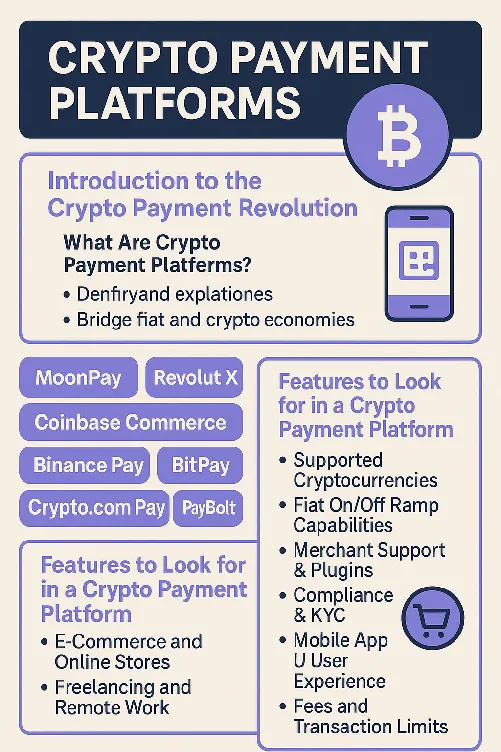
Features to Look for in a Crypto Payment Platform
When choosing a crypto payment platform, it’s tempting to jump straight into the brand names. But let’s hit pause and ask the more important question: what actually makes a crypto payment platform “good” for your needs? Whether you’re a business owner, freelancer, or just exploring crypto for real-world use, here are the key features that separate the leaders from the rest.
Supported Cryptocurrencies
First things first — what coins can you accept? A great platform should support a wide range of popular cryptocurrencies like Bitcoin, Ethereum, USDT, and BNB, while also offering room for growth with altcoins like SHIB, DOGE, or XRP. The more options you provide your customers, the higher your chances of conversion. And let’s face it — nobody wants to turn away a customer just because their favorite coin isn’t accepted.
Fiat On/Off Ramp Capabilities
A platform with fiat on-ramp allows customers to buy crypto using traditional payment methods like credit cards, bank transfers, or mobile wallets. The off-ramp, meanwhile, lets you convert your crypto back into local currency when needed. These features are game-changers, especially for businesses that don’t want to hold volatile assets or deal with manual conversions. Bonus points if the process is instant and supports multiple countries.
Merchant Support & Plugins
If you’re running an online store, ease of integration is critical. Look for platforms offering plug-and-play tools for Shopify, WooCommerce, Magento, or custom APIs. Some even go a step further with invoices, donation buttons, and point-of-sale systems. Whether you’re selling physical products, services, or digital assets, the right toolkit should match your business model without needing a full-stack developer.
Compliance & KYC Procedures
Nobody likes paperwork, but in today’s regulatory landscape, compliance matters. A reputable platform should strike a balance between security and ease of onboarding. Some platforms are non-custodial and don’t require KYC, while others offer full regulatory compliance for enterprises. Choose based on your needs — whether you’re privacy-focused or running a fully legal business setup.
Mobile App & User Experience
In a world that runs on smartphones, a smooth mobile experience is non-negotiable. Look for platforms with clean mobile apps or responsive dashboards that make transactions, withdrawals, and tracking a breeze. For merchants, having a simple QR-based checkout system can seriously improve both speed and customer satisfaction.
Fees and Transaction Limits
Last but not least, understand the cost of doing business. Some platforms charge no fees but earn on exchange rates, while others have flat rates or tiered pricing. Also, check for daily transaction limits, minimum payouts, or currency conversion fees. Transparency here is key — because nobody likes surprise charges when you’re trying to scale your crypto business.
Use Cases: How Crypto Payments Are Being Adopted Globally
Crypto payments aren’t just for tech geeks and blockchain buffs anymore. From e-commerce to charities to in-game purchases, crypto is slowly but surely going mainstream. Here’s how different industries and sectors are embracing the shift — and why it might be time to consider jumping in yourself.
E-Commerce and Online Stores
Let’s start with the obvious. Online stores are among the earliest and most enthusiastic adopters of crypto payments. Whether you’re running a dropshipping business or selling handmade candles, accepting Bitcoin or USDT at checkout can give your store a modern edge and access to a global customer base.
Platforms like Shopify and WooCommerce already offer plugins that make crypto payments seamless, and many merchants love the lower transaction fees compared to credit cards. Plus, there are no chargebacks, which is a relief for sellers used to dealing with payment disputes.
Freelancing and Remote Work
Crypto is a game-changer for freelancers, content creators, and remote workers—especially those in countries where international payments are slow or expensive. Whether you’re a designer in Brazil or a developer in India, getting paid in crypto is often faster, cheaper, and less bureaucratic than wire transfers or PayPal.
Platforms like Bitwage and crypto wallets with invoicing support are making it easier than ever for individuals to receive direct payments in Bitcoin, Ethereum, or stablecoins. It’s borderless freedom, minus the banking red tape.
Donations and NGOs
Non-profits and social impact projects are catching on to crypto too — and for good reason. Crypto donations are borderless, trackable, and often come with fewer restrictions than traditional funding methods.
Organizations like Save the Children and The Water Project have already adopted crypto donations, allowing contributors from around the world to support causes in real time using stablecoins, Bitcoin, or even memecoins. With platforms like NOWPayments or The Giving Block, NGOs can easily integrate crypto donation widgets and expand their funding horizons.
Gaming and NFT Payments
The gaming industry has embraced crypto like no other, and NFTs are the icing on the blockchain cake. Players can now use crypto to buy in-game assets, skins, and upgrades, while NFT marketplaces let gamers trade unique items securely and instantly.
Platforms like Crypto.com Pay and Binance Pay are already integrated into gaming apps, making payments frictionless and fun. Expect this trend to grow as Web3 games become the new norm.
Real-World Retail Adoption
From cafes in Berlin to electronics stores in Tokyo, brick-and-mortar adoption of crypto is real and growing. POS systems with QR code payments powered by platforms like Alchemy Pay or BitPay let businesses accept crypto just like they would a credit card.
It’s especially useful in tourist-heavy areas, where customers might not want to deal with currency exchange but are happy to tap their crypto wallet and go. Fast, simple, and future-forward.
Challenges Facing Crypto Payment Gateways
Crypto payment gateways are revolutionizing how the world transacts — but like any emerging technology, they come with their share of growing pains. From regulatory uncertainty to technical limitations, several roadblocks still stand between mass adoption and mainstream success. Let’s break down the most pressing challenges these platforms face today.
Regulatory Hurdles
The number one buzzkill in the crypto world? Regulation. Or more specifically, the lack of consistent global regulation. Some countries have fully embraced crypto payments, others have outright banned them, and many are still stuck somewhere in between.
This lack of clarity creates headaches for payment platforms trying to expand globally. Compliance is complicated — platforms need to register with local financial authorities, perform KYC/AML checks, and keep up with ever-changing legal frameworks. The uncertainty can discourage both businesses and users from diving into crypto payments, especially in heavily regulated sectors like finance and healthcare.
Price Volatility and Conversion Delays
Let’s be honest: crypto prices are a rollercoaster. One minute you’re accepting $200 in Bitcoin, the next it’s worth $180. This volatility makes businesses nervous — especially those working on thin margins.
Most platforms offer instant conversion to stablecoins or fiat to reduce exposure to market swings, but even that isn’t always foolproof. Network congestion can delay transactions, and sudden price drops can still cause value loss before settlement. Until crypto achieves more price stability or smoother conversion mechanics, this remains a top concern.
Merchant Awareness and Adoption
Despite the buzz, many businesses still ask, “Why should I accept crypto?” The reality is that a large chunk of merchants have never even considered adding crypto payment options — often due to lack of awareness, perceived complexity, or myths about legality.
Some believe it’s only for tech-savvy customers or dark web dealings (thanks, Hollywood), while others worry it’ll confuse their bookkeeping. The solution? Better education, simplified tools, and real-world success stories. Once businesses see the reduced fees, global reach, and no chargebacks, minds start to change.
Scalability and Blockchain Network Fees
You can’t talk about crypto challenges without addressing the elephant in the blockchain: scalability. Popular networks like Ethereum are notorious for high gas fees during peak times, making small payments impractical.
Platforms are exploring Layer 2 solutions, sidechains, and faster blockchains to handle high volumes with lower costs. But until these innovations become fully mainstream, users might still face slow confirmations or unexpected transaction fees, which isn’t great for business.
Crypto payments hold massive promise — but ironing out these wrinkles is essential for them to become truly seamless and universal.
Future Outlook: Are Crypto Payments the New Normal?
Crypto payments have come a long way — from niche internet curiosity to real-world utility. But where is it all headed? Are we on the cusp of a financial revolution, or will traditional systems keep the upper hand? Let’s explore the future of crypto payments and how key trends are shaping what might just become the “new normal.”
CBDCs and Institutional Influence
One of the biggest wildcards in the crypto payment space is the rise of Central Bank Digital Currencies (CBDCs). Unlike Bitcoin or Ethereum, CBDCs are state-backed digital versions of fiat currencies, designed to blend the transparency of blockchain with the control of traditional banking.
Governments from China to the EU to India are already piloting or testing their own versions. While they’re not decentralized like most cryptocurrencies, CBDCs could normalize digital payments, reduce cash dependence, and lay the groundwork for broader blockchain adoption. At the same time, institutional players are investing in crypto infrastructure, signaling long-term interest and integration into the mainstream financial system.
Wallet Integration with Payment Apps
Gone are the days when crypto wallets were just clunky browser extensions or niche apps for hardcore traders. Today, modern wallets are becoming fully-fledged financial dashboards. From MetaMask to Coinbase Wallet to Crypto.com’s app, we’re seeing a trend toward multi-functional tools that combine storage, swapping, spending, and even earning rewards.
This trend of wallets behaving like super apps is set to accelerate. Expect deeper integration with payment platforms, loyalty systems, and even point-of-sale terminals. As user experience improves, even non-technical users will find it easy to shop, send, or save using crypto.
Cross-Border Remittances Revolution
Cross-border payments have always been expensive, slow, and bureaucratic — especially for people sending money home from abroad. Crypto is changing that narrative. With the help of stablecoins and blockchain rails, users can now send money instantly with minimal fees, bypassing middlemen entirely.
This is a lifeline for underbanked regions and migrant workers who want faster and more affordable remittance options. Platforms like Alchemy Pay and Binance Pay are already targeting this segment. As more users discover the benefits, crypto remittances might soon become the preferred option over legacy services like Western Union.
The Rise of Hybrid Payment Platforms
The future likely won’t be “all crypto” or “all fiat” — it’ll be hybrid. That means platforms allowing users to seamlessly switch between crypto and traditional currencies, accept both at checkout, and combine digital assets with traditional finance.
These hybrid solutions are already emerging, offering the best of both worlds — crypto speed and cost efficiency with fiat familiarity and regulatory clarity. As infrastructure improves and UX becomes more intuitive, expect hybrid payment platforms to dominate the next wave of global fintech.
How to Select the Right Platform for You
Choosing the right crypto payment platform can feel like navigating a digital jungle — exciting, but filled with too many options. Whether you’re a casual crypto enthusiast or a business owner wanting to tap into the future of finance, finding a platform that fits your specific needs is key. Let’s break it down in simple terms.
Personal Use vs. Business Needs
First things first — ask yourself: What’s my goal with crypto payments? If you’re just looking to buy or send crypto occasionally, your needs will be vastly different from a business accepting payments from global customers.
For personal use, you’ll want a platform that offers fast transactions, easy wallet connectivity, and low fees. Think user-friendly apps with built-in exchanges or fiat off-ramps. Bonus points if it supports QR codes and cashback rewards.
For businesses, however, it’s more about invoicing, integration, settlement options, and plugin compatibility with platforms like Shopify or WooCommerce. You may also want multi-user support, analytics dashboards, and tax reporting tools to streamline operations.
Compliance Requirements by Region
Crypto may be borderless, but laws and regulations definitely are not. Depending on where you live (or do business), compliance needs can vary drastically.
Some platforms are fully licensed in the US or Europe and require strict KYC (Know Your Customer) protocols, while others operate more freely in crypto-friendly zones. Always check whether a platform is compliant in your region, especially if you’re handling customer data or large transactions.
Using a non-compliant gateway can lead to frozen funds, legal issues, or worse — so don’t skip the legal fine print.
Security and Support Services
When dealing with digital money, security is non-negotiable. Look for platforms that offer two-factor authentication (2FA), encrypted transactions, cold wallet storage, and regular audits.
Also, don’t underestimate the power of human support. Whether you’re a newbie or a seasoned merchant, things can go wrong. Choose a provider with responsive customer support, live chat, or a knowledge base that doesn’t look like it was built in 2008.
Ecosystem Integration with Wallets/Exchanges
The last piece of the puzzle? Compatibility. Your ideal platform should work smoothly with popular wallets, exchanges, and blockchains. The more integrated it is with your existing tools, the easier your experience will be — no one likes switching between six apps just to make one payment.
Whether you’re diving into crypto payments for fun or scaling your online business, picking the right platform can make or break your journey.
Conclusion: Embracing the Crypto Payment Frontier
The world of finance is changing — and it’s not waiting for anyone to catch up. What started as a decentralized experiment is now reshaping how we think about money, trade, and trust. Crypto payment platforms are no longer just techy tools for blockchain geeks; they’ve evolved into powerful gateways connecting the digital and traditional economies.
Whether you’re a freelancer looking to receive global payments, an e-commerce merchant expanding into crypto, or just someone curious about how digital currencies can simplify your life — there’s a platform out there tailored for your needs.
From pioneers like BitPay and Coinbase Commerce to ecosystem powerhouses like Binance Pay and Crypto.com Pay, and newer players like Alchemy Pay, NOWPayments, and PayBolt, the choices are abundant. Each offers unique features — some focus on fiat on/off ramps, others on fee-free transfers, some on merchant plugins, and others on multi-chain support.
But as exciting as it all sounds, it’s not a plug-and-play world just yet. The crypto payments space still faces challenges like regulatory friction, price volatility, and merchant hesitancy. And that’s okay — every new technology has its bumps. What matters is that the momentum is strong, and innovation is pushing forward.
So, how do you move ahead from here?
Start by identifying your primary use case. Do you want simplicity for daily spending? Look into platforms with great mobile UX and cashback options. Are you managing a store? Focus on merchant integration, plugin support, and payout flexibility. Need global remittance tools? Seek out apps with low fees and cross-border capability.
Second, do your homework. Not all platforms are licensed in every country. Some have higher fees or limited coin support. Make sure you’re comfortable with the platform’s security features, KYC process, and customer support.
And finally — start small. Test a few payments. Explore wallet integrations. Try sending a few dollars across borders. The best way to understand the potential of crypto payments is to experience it yourself.
The future of money won’t be black or white, crypto or fiat. It’ll be hybrid, fast, borderless, and user-focused. And you, whether as a user, merchant, or investor, have a front-row seat in this financial revolution.
So why wait?
Explore. Experiment. Embrace the shift.
The future of payments is already knocking — and it sounds a lot like the soft ping of a blockchain confirmation.


Hello, just wanted to tell you, I enjoyed this article.
It was practical. Keep on posting!