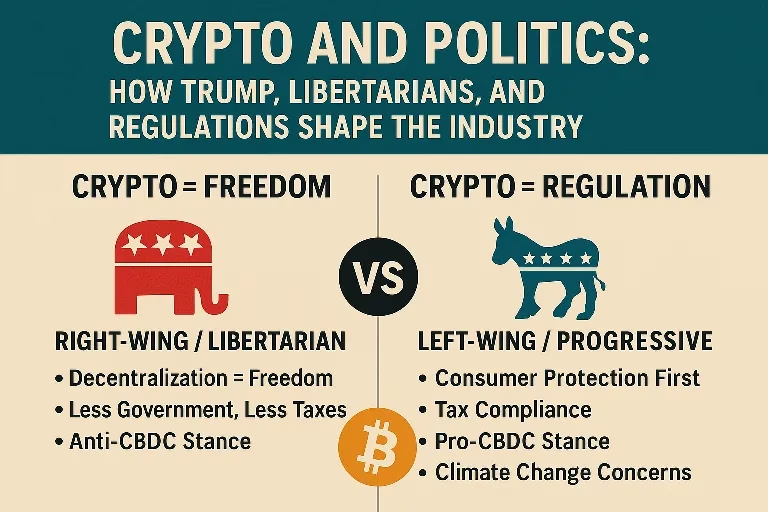

(Trump, Libertarians, and Regulations)
Crypto as More Than Money
Cryptocurrency is often introduced as a digital currency or an investment asset. But those who follow the industry closely know it is much more than that. Crypto is also a cultural and political movement that challenges the way financial power is controlled and distributed.
The crypto community is united by the idea of decentralization. People like the freedom of holding assets without banks or governments dictating the rules. Yet, when politics enters the picture, the unity starts to break down.
The Political Divide in the Crypto Community
In the United States, the divide is sharp. On one side, you have conservatives, Trump supporters, and libertarians who see cryptocurrency as the perfect tool to resist government oversight. For them, Bitcoin and other digital assets are symbols of freedom and personal responsibility.
On the other side, progressives and left-leaning politicians argue that the crypto industry needs stronger regulations. They highlight issues like fraud, scams, environmental impact, and the risk of financial instability. Their argument is built around consumer protection and systemic safety.
This clash of ideas has turned the crypto community into a battleground where ideology is just as important as technology.
Donald Trump and the Crypto Conversation
Trump’s Changing Tone on Crypto
Donald Trump’s relationship with crypto has been complicated. In 2019, he called Bitcoin “a scam.” But by 2024, during his political comeback, his tone shifted. He recognized that a large portion of his base was invested in crypto and supportive of its ideals.
Trump started framing crypto as a tool for American independence, particularly against foreign control over finance. He promised fewer restrictions and leaned into the narrative of freedom from government interference. For many in the crypto community, this was a welcome change.
Trump’s Supporters and Their Crypto Vision
Trump’s supporters often view cryptocurrency as an extension of their political philosophy. They prefer small government, low regulation, and individual empowerment. To them, buying and holding Bitcoin or Ethereum is not just about profit—it is about taking control back from institutions they don’t trust.
In rallies and online forums, Trump-aligned groups celebrate crypto as part of a larger fight against what they call “globalist” financial systems. This creates a sense of identity, where holding crypto becomes almost a political statement.
Libertarians and the Ideology of Decentralization
Libertarians as Early Crypto Pioneers
Long before crypto became a mainstream discussion, libertarians were already embracing it. They saw Bitcoin’s whitepaper not only as a technical document but as a manifesto against centralized power. For libertarians, crypto is the ultimate form of financial freedom.
They argue that individuals should be free to trade, invest, and store value without interference. The very idea of regulation goes against their philosophy. In many ways, the libertarian spirit built the foundation of today’s crypto community.
Libertarians vs. Conservatives
While libertarians and conservatives both favor fewer regulations, their reasons differ. Conservatives often emphasize national security and protecting American innovation. Libertarians, however, focus purely on individual autonomy.
This difference in motivation sometimes creates friction. Libertarians do not want any state involvement, while conservatives may still argue for rules that protect national interests. Yet, both camps largely agree that overregulation would suffocate innovation.
The Progressive Push for Regulations
Left-Wing Concerns Over Crypto
Progressives see cryptocurrency with skepticism. Their concerns focus on three areas: consumer protection, financial stability, and environmental impact. The rise of scams and Ponzi schemes in crypto has given them a strong argument for stricter oversight.
They also worry that unregulated crypto markets can create bubbles that threaten the broader economy. From their perspective, regulations are not about control—they are about safety.
Climate and Social Responsibility
Another important angle for progressives is climate change. Mining Bitcoin consumes massive amounts of electricity. Environmental groups aligned with left-leaning politics argue that unchecked mining damages the planet. They call for green regulations that limit or tax crypto mining.
For progressives, crypto should only have a place in the financial system if it is transparent, ethical, and environmentally responsible.
The Battle Over Regulations
The SEC, Congress, and the Ongoing Debate
The U.S. Securities and Exchange Commission (SEC) has taken an aggressive stance against many crypto projects. This has been celebrated by progressives and criticized by conservatives and libertarians.
In Congress, debates over crypto regulation reflect the broader political divide. Republican lawmakers push for innovation and light-touch policies. Democrats often demand stricter frameworks. The result is a deadlock, where uncertainty becomes the biggest challenge for the industry.
State-Level Experiments
Some states, such as Wyoming and Texas, have positioned themselves as crypto-friendly hubs. They welcome innovation, offer legal clarity, and even pass laws protecting miners and investors. Meanwhile, states with progressive leadership, like New York, have imposed stricter rules.
This creates a patchwork system where crypto users in one state experience freedom, while those in another face heavy restrictions. It also fuels the national debate about what the federal government’s role should be.
Crypto and the Future of Politics
Crypto as a Campaign Tool
As elections approach, cryptocurrency has become more than just a financial subject. Politicians now use crypto as a campaign talking point. Trump, libertarians, and right-wing candidates often promise freedom for the industry. Progressives argue for regulation to protect ordinary people.
For voters, especially younger generations, a candidate’s position on crypto can be a deciding factor. This shows how deeply political the issue has become.
The Road Ahead
The crypto community will continue to reflect the political divide. Some will see it as a weapon against government control, while others will demand tighter rules for safety and fairness. What is clear is that crypto can no longer be separated from politics.
As long as cryptocurrency challenges the traditional financial system, it will remain at the center of ideological debates. The divide may grow sharper, but it also keeps crypto at the heart of America’s political conversation.
Right-Wing / Libertarian Viewpoint: Crypto = Financial Freedom
Key Beliefs of Right-Wing and Libertarian Crypto Supporters
Decentralization = Freedom
For right-wing and libertarian thinkers, the core idea of cryptocurrency is freedom. Decentralization allows individuals to move money, store value, and create wealth without asking for permission from central banks or government authorities. In their eyes, Bitcoin is not just a digital asset—it is a declaration of independence from centralized financial power.
This belief connects deeply with the libertarian philosophy of self-sovereignty. If you control your wallet and your private keys, then no bureaucrat or institution can tell you how to use your money. That sense of personal empowerment makes crypto feel less like an investment and more like a movement.
Less Government, Less Taxes
Right-wing supporters and libertarians share a common dislike for government overreach. They see crypto as a shield against unnecessary taxation and regulatory control. Holding and trading Bitcoin becomes an act of financial independence, where individuals decide how to use their wealth without heavy-handed interference.
This viewpoint often clashes with progressive politics, which push for higher taxes and stricter financial oversight. For libertarians and conservatives, however, crypto should remain free from burdensome tax codes and regulatory red tape. They argue that less government means more innovation, which ultimately benefits the economy as a whole.
Anti-CBDC Stance
A strong part of the libertarian and conservative crypto mindset is opposition to Central Bank Digital Currencies (CBDCs). Supporters believe CBDCs are the exact opposite of what Bitcoin stands for. Instead of giving people financial independence, CBDCs would give governments the power to track, monitor, and even control spending behavior.
Many right-wing leaders describe CBDCs as tools of surveillance. They warn that once digital currencies are issued by central banks, every transaction could be monitored. This fear fuels a push toward decentralized crypto as the safer alternative. In this sense, rejecting CBDCs has become a rallying cry for financial liberty.
Pro-Trump and Pro-Crypto Policies
Donald Trump, once skeptical of Bitcoin, has shifted his tone in recent years. He now openly speaks about the potential of blockchain innovation and crypto mining. His shift aligns with the growing number of his supporters who see crypto as a way to resist global financial institutions and maintain America’s economic edge.
Trump’s embrace of crypto-friendly policies has solidified his image among libertarians and conservatives as a leader willing to push back against government overreach. By supporting mining operations and blockchain development, Trump positions himself as a champion of financial independence in the digital era.
Examples of Right-Wing Crypto Influence
El Salvador’s Bitcoin Adoption
One of the most powerful examples of right-wing crypto influence comes from El Salvador. President Nayib Bukele, a populist leader with conservative leanings, made Bitcoin legal tender in 2021. His decision shocked the global financial world and showcased how crypto could move from fringe idea to national policy.
Bukele’s experiment with Bitcoin adoption reflects the libertarian spirit. He framed it as a move toward financial independence for his country, reducing reliance on international lenders and centralized financial systems. While controversial, it has inspired debates worldwide about whether crypto could reshape national economies.
Trump NFTs and MAGA Coin
In the United States, crypto has even found its way into political branding. Trump-themed NFTs and meme coins, such as MAGA Coin, have gained attention among his supporters. These digital assets combine political identity with financial innovation.
Supporters view them as more than collectibles—they are statements of loyalty and belief in Trump’s vision. In this way, crypto becomes not just an investment but a cultural and political expression. The blending of politics, identity, and digital finance illustrates how deeply the right-wing crypto movement runs.
Ron DeSantis’ Anti-CBDC Stance
Florida Governor Ron DeSantis has also played a major role in shaping right-wing crypto discourse. His outspoken opposition to CBDCs aligns with libertarian ideals. DeSantis argues that government-issued digital currencies would threaten financial privacy and give Washington unprecedented control over citizens’ money.
By positioning himself against CBDCs and in favor of decentralized crypto, DeSantis strengthens his image as a defender of personal freedom. His stance resonates with both libertarians and conservatives, showing how crypto has become a powerful wedge issue in American politics.
Why the Right-Wing Sees Crypto as Financial Independence
Breaking Free From Centralized Control
Right-wing and libertarian supporters see crypto as an instrument of liberation. By using decentralized networks, they can bypass banks, regulators, and institutions that traditionally control wealth. This is especially attractive to those who believe that centralized systems are prone to corruption and inefficiency.
The ability to send money across borders without restrictions or government oversight strengthens their view that crypto equals financial freedom. For them, holding Bitcoin or Ethereum is more than a financial decision—it is a political act of independence.
Encouraging Innovation, Not Restrictions
A recurring theme among right-wing crypto advocates is the need for innovation. They argue that overregulation could strangle one of the most promising industries of the 21st century. Instead of treating crypto as a threat, they see it as an opportunity for growth, jobs, and technological leadership.
This is why libertarians and conservatives push for policies that create a friendly environment for blockchain startups and mining operations. By reducing red tape, they believe America can stay ahead in the global digital economy.
Community and Identity
Another interesting aspect of the right-wing crypto movement is how it has built a sense of community. For libertarians, crypto embodies their lifelong battle against government intrusion. For Trump supporters, it has become a symbol of resistance to political and financial elites.
The overlap between political identity and crypto ownership creates a strong cultural bond. Online forums, rallies, and social media spaces often highlight crypto as part of a larger fight for independence and freedom. This cultural momentum helps drive the movement forward.
The Expanding Role of Crypto in Right-Wing Politics
Campaigns and Donations
Crypto is also making its way into political fundraising. Some conservative campaigns have started accepting Bitcoin donations, framing it as a modern, decentralized way to support candidates. This reflects how crypto is becoming a tool for political expression as well as financial freedom.
For libertarians, this is especially appealing. It removes traditional financial gatekeepers and allows direct support for candidates who align with their values. The trend shows no signs of slowing down as digital currencies become more mainstream.
Future of the Right-Wing Crypto Agenda
Looking forward, it is clear that crypto will remain central to right-wing and libertarian politics. Whether through Trump’s pro-crypto stance, DeSantis’ anti-CBDC campaigns, or Bukele’s experiment in El Salvador, the influence is spreading.
Supporters see crypto as a path toward independence, innovation, and protection from government overreach. The belief that crypto equals financial freedom has become more than just a slogan—it is now a political movement shaping real policies and future debates.
Left-Wing / Progressive Viewpoint: Crypto Needs Regulation
Key Beliefs of Left-Wing Crypto Opponents
Consumer Protection First
Progressives believe that without oversight, the crypto community becomes a playground for scams. Investors, especially newcomers, are at risk of losing their savings to fraudulent schemes, pump-and-dump tokens, and unstable projects. This is why consumer protection stands at the center of left-wing arguments.
They argue that crypto exchanges and projects should be held accountable under strong laws. For progressives, financial freedom does not mean letting people fall into traps—it means creating a safe environment where investors know their money is not disappearing overnight.
Tax Compliance
Another major pillar of the progressive stance is taxation. Left-leaning policymakers argue that governments must ensure crypto profits are taxed fairly. Without regulation, they worry cryptocurrencies will become a tool for tax evasion and black money circulation.
To them, taxation is not just about revenue—it is about fairness. If traditional businesses and individuals pay taxes, then crypto investors should not get a free pass. By enforcing tax compliance in the crypto industry, progressives believe financial justice can be maintained.
Pro-CBDC Stance
Progressives often see Central Bank Digital Currencies (CBDCs) as a solution rather than a threat. Unlike libertarians who fear government-backed digital money, progressives believe CBDCs can improve transparency, reduce fraud, and stabilize financial systems.
They argue that CBDCs could bring digital payments under legal frameworks while reducing reliance on volatile cryptocurrencies. In their vision, CBDCs are not a tool of surveillance but a safeguard against instability. This pro-CBDC stance reflects the progressive trust in state-led solutions.
Environmental Concerns
Bitcoin mining consumes enormous amounts of energy, often compared to the electricity usage of small nations. For progressives, this is a red flag. They view unchecked mining as a direct threat to global climate goals.
Environmental concerns have pushed progressive leaders to call for eco-friendly regulations on mining. Some propose limits on energy-intensive proof-of-work systems, while others suggest incentives for greener alternatives like proof-of-stake. To progressives, crypto must adapt to sustainability if it wants to survive long term.
Examples of Left-Wing Crypto Influence
Elizabeth Warren’s “Anti-Crypto Army”
One of the loudest progressive voices against crypto is Senator Elizabeth Warren. She has openly declared the formation of an “anti-crypto army” aimed at protecting American consumers. Warren often highlights fraud cases, money laundering, and environmental harm caused by Bitcoin mining.
Her push has made crypto regulation a political priority in Washington. Supporters see her as a guardian of financial safety, while critics accuse her of trying to strangle innovation. Regardless, her stance has cemented the progressive belief that crypto needs regulation.
SEC’s Crackdown on Crypto Firms
Under the Biden administration, the Securities and Exchange Commission (SEC) has taken an aggressive approach toward the crypto community. Exchanges have faced lawsuits, and projects have been forced to comply with strict securities laws. For progressives, this crackdown is not excessive—it is necessary.
They argue that the SEC is doing its job by holding crypto firms accountable. In their view, without these interventions, the market would remain a wild west full of risks. The progressive narrative frames these actions as steps toward financial stability.
European Union’s MiCA Framework
Progressive influence is not limited to the United States. In Europe, the EU’s Markets in Crypto-Assets (MiCA) framework has introduced one of the most comprehensive sets of regulations for the industry. MiCA requires crypto firms to operate under clear legal guidelines, ensuring accountability and transparency.
This framework represents the progressive belief that rules bring order. By forcing crypto companies to comply with regulations, MiCA aims to protect investors and prevent abuse. It also reflects the left-wing commitment to placing public interest above unchecked innovation.
Why Progressives Say Crypto Needs Oversight
Preventing Financial Crimes
Progressives often argue that without oversight, the crypto industry enables financial crimes. Money laundering, terrorist financing, and tax evasion are common concerns. Anonymous transactions, while celebrated by libertarians, are seen by progressives as dangerous loopholes.
By pushing for regulations, they believe governments can close these gaps. They argue that a transparent system reduces criminal misuse and helps crypto gain legitimacy in the long run. To progressives, regulation is not an attack on crypto—it is a safeguard against its darker uses.
Building Financial Stability
Volatility is another issue that fuels progressive skepticism. They argue that crypto markets, prone to sudden crashes, can harm everyday investors. Without safety nets, people can lose their life savings in minutes.
This belief strengthens their call for frameworks that stabilize markets. For progressives, regulations can prevent reckless speculation and ensure that crypto integrates smoothly into the broader economy. Stability, in their eyes, matters more than wild profits.
Protecting the Environment
The progressive focus on sustainability cannot be overstated. With global warming becoming a pressing issue, progressives argue that industries like crypto must do their part to reduce harm. Bitcoin mining, with its massive carbon footprint, is often the target of their criticism.
Some progressives advocate for taxing energy-intensive mining operations. Others push for promoting greener blockchains that use proof-of-stake instead of proof-of-work. Their central message remains the same: crypto must evolve to be eco-friendly if it wants mainstream acceptance.
The Expanding Role of Regulation in the Crypto Community
Political Momentum for Regulation
Progressive leaders have successfully placed crypto under the spotlight of national debates. Proposals for stricter rules appear in policy discussions, campaigns, and media coverage. The call for regulation is no longer a fringe issue—it has entered mainstream politics.
By framing regulation as a matter of public safety and fairness, progressives have won support from parts of the population that fear the risks of an unregulated crypto market. This momentum ensures that the debate over regulation will remain strong in the coming years.
A Clash of Philosophies
The progressive viewpoint often clashes with the right-wing belief in crypto as financial freedom. To progressives, financial freedom without responsibility is dangerous. They argue that unchecked freedom leads to chaos, and chaos harms ordinary people.
This philosophical divide ensures that the debate will not end soon. Progressives will continue to push for oversight, while libertarians and conservatives will resist government control. The crypto community sits at the center of this ongoing clash.
The Path Forward
As crypto becomes more integrated into global economies, progressive policies are likely to expand. Regulation is being written into law across nations, from the United States to the European Union. For progressives, this is not about killing innovation but about shaping it responsibly.
The message from the left-wing is consistent: crypto needs regulation to protect consumers, stabilize markets, and safeguard the planet. In their eyes, oversight is not the enemy of progress—it is the foundation for building a fair and sustainable future for the crypto community.
Trump Derangement Syndrome (TDS) and Its Impact on Crypto
Understanding Trump Derangement Syndrome in the Crypto Debate
What Is TDS?
The phrase “Trump Derangement Syndrome” (TDS) has become a cultural shorthand. Trump supporters use it to describe people who oppose him so strongly that they reject anything linked to him, no matter the context. In politics, it often shapes debates beyond reason. In the crypto community, it has now become part of the conversation.
For Trump’s base, the connection between Trump and crypto is positive. They frame Bitcoin and blockchain as tools of freedom, perfectly aligned with the “Make America Great Again” vision. For opponents, the same link is a reason to distrust crypto even more. Their resistance is not just about technology but also about who supports it.
Why TDS Matters in Crypto
This clash over Trump’s influence creates ripple effects in policy. When Trump embraces Bitcoin mining or blockchain innovation, his opponents see it as a threat. They argue that crypto becomes a symbol of deregulation, instability, and corporate greed. For his supporters, however, it becomes a symbol of resistance to government overreach.
TDS matters because it shapes how lawmakers, regulators, and even voters think about digital assets. Instead of debating crypto on its own merits, many view it through a political lens defined by loyalty or opposition to Trump.
For Trump Supporters: Crypto as Financial Independence
Crypto and the MAGA Movement
Trump supporters see cryptocurrency as more than money. To them, Bitcoin represents financial independence from central banks, global financial institutions, and government surveillance. It embodies the same populist spirit that fuels the MAGA movement.
They argue that owning crypto is like voting with your wallet against centralized control. Just as Trump challenges the political establishment, Bitcoin challenges the financial establishment. This parallel strengthens the emotional bond between Trump’s message and crypto culture.
A Weapon Against Central Control
For conservatives and libertarians aligned with Trump, crypto is a tool to push back against what they view as big-government policies. They reject central bank digital currencies, oppose high taxation, and promote mining freedom.
Trump’s speeches, where he defends blockchain innovation, resonate with this community. His supporters cheer for policies that reduce regulatory barriers, seeing them as part of a broader fight for economic freedom. In this world, crypto equals independence, and independence equals patriotism.
For Trump Opponents: Crypto as Financial Risk
Crypto and Progressive Skepticism
On the other side, progressives link crypto to financial instability. They argue that digital currencies are too volatile and too vulnerable to scams. Their skepticism grows stronger when Trump embraces the technology. For them, Trump’s pro-crypto stance is proof that the industry needs tougher oversight.
TDS plays a role here. If Trump promotes crypto, his opponents instinctively position themselves against it. They warn that deregulation could harm consumers, increase fraud, and even destabilize the economy. Crypto, in this context, becomes guilty by association.
Calls for Stronger Regulations
Progressives push for policies that tightly control the crypto community. They highlight environmental concerns, tax evasion, and the risks of speculative bubbles. For them, Trump’s association with crypto only adds urgency. If Trump calls for fewer restrictions, they respond by demanding stronger safeguards.
This creates a political tug-of-war, where crypto is less about technology and more about ideology. Instead of asking “Is this innovation good or bad?” the debate shifts to “Whose side is this technology on?”
The Political Future of Crypto Under Trump’s Influence
If Trump Returns to Power
As Trump prepares for a possible return to power, his stance on crypto will carry heavy weight. Supporters expect that a second Trump administration would loosen restrictions. Policies could favor mining, reduce SEC crackdowns, and promote blockchain startups.
For the crypto community, this would mean more freedom to experiment. Supporters believe relaxed regulations would create jobs, attract investment, and position the U.S. as a global leader in digital assets. The message is clear: under Trump, crypto equals opportunity.
If Progressives Dominate Politics
If left-wing leaders hold power, the picture changes. Expect more investigations into exchanges, stricter reporting requirements, and possibly limits on mining. Progressives would likely support CBDCs while placing heavier controls on decentralized cryptocurrencies.
This scenario is framed as a matter of safety and fairness. Supporters of regulation argue that strong oversight protects ordinary people. Yet, for libertarians and conservatives, it feels like an attack on freedom.
The Role of TDS in Shaping Public Opinion
Crypto as a Political Symbol
Trump Derangement Syndrome ensures that crypto is no longer judged neutrally. Instead, it becomes a political symbol. Supporters highlight it as a tool for freedom, while opponents portray it as a dangerous gamble. The divide is emotional as much as it is rational.
For Trump voters, buying Bitcoin is almost like casting a ballot for independence. For his critics, it is like endorsing financial chaos. This polarization fuels online debates, policy decisions, and even investment behavior.
Media Narratives and Cultural Battles
Media outlets also play a role in deepening the divide. Right-leaning platforms praise crypto as the future of finance and a weapon against globalist control. Left-leaning outlets emphasize scams, volatility, and environmental damage. The narratives often align with political loyalties more than financial analysis.
This cultural battle reinforces the role of TDS. Crypto is less about blockchain code and more about the story people tell about it. Whether that story is about independence or instability depends on where you stand politically.
Looking Ahead: Crypto in a Polarized America
Shifting Regulations With Shifting Power
The future of crypto in America will likely shift with political winds. A Trump-influenced government could create a friendlier climate, while progressive dominance could impose tighter rules. The crypto community must navigate these changes, knowing that ideology plays as much of a role as economics.
The divide ensures that crypto remains in the spotlight of U.S. politics. Whether praised as financial freedom or condemned as financial risk, it will not be ignored. Trump Derangement Syndrome guarantees that the debate will stay heated and deeply personal.
Crypto and the Larger Political Divide
Crypto’s future mirrors America’s larger political divide. Just as the country splits over health care, immigration, or climate change, it now splits over Bitcoin. The battle is not only about money—it is about values, freedom, and the role of government in everyday life.
With Trump’s shadow looming large, the conversation around crypto will continue to carry emotional weight. Supporters will tie it to patriotism and independence, while opponents will tie it to risk and instability. In this climate, crypto becomes more than technology. It becomes a battlefield where ideology, identity, and finance collide.
Future of Crypto Regulations: A Political Tug of War
How Politics Shapes the Future of Crypto
Cryptocurrency has moved far beyond the stage of being just a digital experiment. It is now a mainstream financial force that challenges traditional banking and government control. As adoption grows, the question of regulation becomes unavoidable.
The future of the crypto community will be shaped not only by innovation but also by politics. Lawmakers, presidents, and regulators will decide how much freedom or control the industry enjoys. This creates a tug of war between two competing visions: one led by Trump and libertarians, the other driven by progressives and left-wing policymakers.
Scenario 1: Trump and Libertarian Influence Grows
Relaxed Crypto Regulations
If Trump or libertarian-minded leaders take charge, expect a much lighter regulatory touch. The philosophy here is simple: less government means more innovation. Under this vision, crypto exchanges, miners, and blockchain startups would face fewer barriers.
Regulatory scrutiny would ease, allowing the crypto community to flourish without constant legal battles. Taxation on crypto gains might also be reduced, encouraging more Americans to invest and participate in decentralized finance. Supporters believe this approach would position the U.S. as a leader in digital assets globally.
More Crypto-Friendly Policies
Libertarians and conservatives argue that crypto can drive economic growth. Under their influence, policies would likely focus on supporting blockchain research, encouraging mining, and offering clarity for startups. Instead of punishing innovation, they would reward it.
This could mean tax breaks for companies working on blockchain solutions or federal support for digital infrastructure. The goal would be to create an environment where the crypto community feels empowered, not restricted. Proponents believe that friendly policies would help the U.S. stay ahead of global competitors like China.
Resistance Against CBDCs
A defining feature of this scenario would be strong opposition to Central Bank Digital Currencies (CBDCs). Trump and libertarian leaders see CBDCs as tools of government surveillance and control. For them, these digital dollars threaten financial freedom.
Policies might include outright bans or heavy restrictions on CBDCs. Instead, decentralized cryptocurrencies like Bitcoin would be promoted as the true path to financial independence. This resistance aligns with the broader libertarian belief in limiting state power.
Scenario 2: Progressive Policies Take Over
Increased Regulatory Oversight
If progressives dominate the political stage, the crypto community would face stricter rules. Agencies like the SEC, CFTC, and IRS would expand their role in monitoring exchanges and projects. Every transaction could fall under more scrutiny, with tighter compliance requirements for businesses.
This approach is framed as consumer protection. Progressives argue that oversight prevents fraud, protects investors, and stabilizes volatile markets. While critics see this as government overreach, supporters claim it is necessary for long-term safety.
Higher Taxation on Crypto Gains
Another outcome of progressive dominance would be heavier taxation on crypto profits. Governments could treat gains from Bitcoin, Ethereum, and other digital assets like traditional capital gains but with stricter enforcement.
Supporters of these policies argue that fair taxation ensures everyone contributes to public services. They also worry that crypto’s current loopholes encourage black money and tax evasion. By closing these gaps, progressives aim to create a fairer financial system, even if it means investors pay more.
Global Coordination on Crypto Laws
Progressives tend to favor international cooperation. In this scenario, expect stronger efforts to align regulations across countries. The European Union’s MiCA framework could become a model, inspiring similar laws in the U.S. and beyond.
Global coordination would aim to reduce regulatory arbitrage, where companies move to friendlier jurisdictions to avoid rules. It could also help fight cross-border money laundering and financial crimes. For the crypto community, however, this may feel like the end of its free-spirited culture.
The Political Divide and Its Consequences
A Battle Between Freedom and Safety
The divide between Trump-aligned libertarians and progressives is not just about rules. It reflects two very different philosophies. One side sees crypto as freedom, an escape from government control. The other sees it as risk, a space that must be managed for the sake of stability.
This clash ensures that the future of crypto regulations will remain uncertain. Investors and innovators must prepare for shifting tides depending on who holds power. Each election cycle could bring a new wave of rules or relief.
Impact on the Crypto Community
For the crypto community, politics has become just as important as technology. Developers now pay attention to speeches by politicians as much as they follow updates to blockchain code. Traders watch elections with the same intensity they watch Bitcoin charts.
This shows how deeply political decisions are tied to crypto adoption. A supportive administration could drive mass adoption, while a hostile one could slow growth. The community stands caught in the middle of this tug of war.
The Road Ahead for Crypto Regulations
The Possibility of Compromise
While the divide is sharp, there is also a chance for compromise. Some leaders may recognize that too much regulation stifles growth, while too little invites chaos. A balanced approach could include clear rules for exchanges, fair taxation, and incentives for sustainable mining.
Such middle ground would allow innovation to thrive while protecting consumers. Whether this balance can be achieved depends on political will and cooperation between both sides of the spectrum.
Preparing for Shifting Policies
For those in the crypto community, flexibility is key. The industry must prepare for both scenarios: a libertarian-friendly boom or a progressive-driven regulatory clampdown. Adaptation will be the survival strategy.
Companies may diversify operations globally to avoid risks tied to U.S. politics. Investors may adjust portfolios based on tax changes and regulatory updates. The future of crypto is not just about code—it is about navigating an unpredictable political environment.
Crypto as a Political Priority
No matter which side wins, one thing is clear: crypto is now a political priority. It is no longer ignored or dismissed as a niche trend. From Trump rallies to progressive campaigns, cryptocurrency has entered the heart of the political stage.
This ensures that crypto regulations will remain dynamic, shaped by ideology as much as economics. The tug of war between freedom and oversight will decide how the crypto community evolves in the years to come.
Conclusion: Is Decentralization or Regulation More Important?
The Central Dilemma of the Crypto Community
The crypto community finds itself standing at a crossroads. On one side lies decentralization, the dream that inspired Bitcoin’s creation. On the other side lies regulation, the structured oversight governments insist is necessary. Both paths have merit, but they represent very different futures for digital assets.
Decentralization promises freedom, independence, and the power to move money without asking permission. Regulation, however, offers safety nets, stability, and accountability. This ongoing debate defines the very identity of cryptocurrency today.
Decentralization as the Heart of Crypto
The Libertarian Vision
Libertarians and right-wing supporters see crypto as a shield against government control. For them, decentralization is not just a technical feature but a philosophy. It represents financial sovereignty—the ability to hold wealth without banks or bureaucrats.
This vision goes hand in hand with political ideals. A decentralized system empowers individuals, reduces state power, and creates a world where financial freedom is a right, not a privilege. The crypto community that aligns with this belief often embraces Bitcoin as “digital gold” and Ethereum as the foundation of decentralized applications.
Trust in Code Over Institutions
In a decentralized ecosystem, trust shifts away from governments and corporations. The blockchain itself becomes the source of truth. Smart contracts replace middlemen, and transactions happen transparently on public ledgers.
For advocates of decentralization, this system is superior because it removes human error and corruption. No single authority can freeze accounts or block payments. Power is distributed, and innovation thrives without red tape.
Regulation as the Necessary Guardrail
Why Progressives Push for Oversight
Progressives argue that without rules, the crypto community is vulnerable to chaos. Fraud, scams, and financial crimes flourish in unregulated spaces. They believe government oversight is the only way to protect everyday investors from predatory schemes.
Consumer protection stands at the core of this view. Regulation ensures that exchanges follow security standards, that projects are transparent, and that taxes are paid fairly. To progressives, this is not about killing innovation—it is about making sure innovation does not harm society.
The Stability Argument
Supporters of regulation also highlight financial stability. They warn that unchecked speculation can trigger economic risks, just as the 2008 financial crisis showed with traditional markets. By imposing rules, governments aim to prevent a similar meltdown in the digital era.
This includes monitoring stablecoins, enforcing reporting requirements, and possibly introducing Central Bank Digital Currencies (CBDCs). Regulation, in their eyes, is the only way to integrate crypto safely into the global economy.
The Clash Between Ideals
Freedom vs. Safety
The tension between decentralization and regulation reflects a deeper philosophical battle. Freedom without safety can lead to exploitation. Safety without freedom can lead to surveillance and control. The crypto community is caught in this tug of war, and neither side is ready to compromise easily.
This divide has political colors. Trump and libertarians lean toward freedom and financial independence. Progressives lean toward regulation and oversight. The outcome of elections and political battles will directly shape how the crypto community evolves.
The Role of Trust
At its core, the debate comes down to trust. Should people trust governments and institutions to regulate fairly? Or should they trust decentralized code to function without interference? Each choice comes with risks and rewards.
For some, government oversight feels like a safety blanket. For others, it feels like a trap. The crypto world remains deeply divided on where trust should truly lie.
The Investor’s Dilemma
Navigating Political Shifts
Investors are not just watching Bitcoin charts—they are watching political campaigns. A pro-crypto administration can create opportunities, while a hostile one can impose restrictions. This means investors must adapt strategies based on shifting laws and tax rules.
Some may choose to diversify globally, moving assets to jurisdictions with friendlier policies. Others may embrace decentralized exchanges that operate beyond borders. For the crypto community, flexibility has become a survival tool.
Balancing Risk and Opportunity
Investors face a balancing act. Decentralization offers huge opportunities but also higher risks. Regulation reduces risk but may limit profits. Choosing between them is less about ideology and more about personal strategy.
The truth is that most investors want both. They want freedom to innovate and grow wealth, but they also want protection against scams and systemic collapses. This creates a demand for hybrid solutions—clear rules that still respect the decentralized spirit.
What’s Your Take?
A Question for the Crypto Community
The debate ultimately circles back to a simple question: should crypto remain free from government control, or should it be regulated for security and stability? This is not a theoretical question—it is shaping laws, elections, and markets right now.
Supporters of decentralization believe any regulation is a betrayal of Satoshi Nakamoto’s vision. Supporters of regulation believe without oversight, crypto will collapse under its own chaos. Both sides believe they are protecting the future, but they define “protection” very differently.
An Ongoing Battle
The political tug of war over crypto regulations shows no signs of ending. Each side has strong arguments, and both continue to influence global policies. Whether decentralization or regulation wins depends on who holds power and how the crypto community responds.
For now, investors, developers, and enthusiasts must stay alert. Policies may shift quickly, and each decision will impact adoption, innovation, and financial freedom. The crypto community cannot afford to ignore politics any longer.
A Future Shaped by Politics
Decentralization and regulation are not just technical choices—they are political ones. The future of crypto will be defined by this constant struggle between freedom and oversight. Neither side will fully win, and the balance will keep shifting with time.
One thing, however, is undeniable: cryptocurrency is no longer just about technology. It is about power, ideology, and control. And as long as politics remains divided, the crypto community will continue debating which matters more—decentralization or regulation.